
Joining Community Choirs in Your Region
Find local choirs, understand what to expect, and discover why singing together matters

Why Now Is the Perfect Time to Join
There’s something magical about raising your voice with others. It’s not about being the best singer — it’s about belonging to something bigger. Whether you’re in Lisbon, Porto, or a smaller town across Portugal, community choirs have become gathering places where people connect through music.
We’ve spoken with dozens of choir members aged 40-60, and they’ll tell you the same thing: they weren’t expecting to find friendship, confidence, and genuine joy in rehearsals. Most admit they were nervous walking in for the first time. But they came back because the experience felt different from anything else they’d tried.

How to Find Choirs Near You
Finding a choir isn’t difficult anymore. Start by checking your local council websites — most municipalities list registered choirs and their rehearsal schedules. Cultural centers in your city almost always have bulletin boards with flyers or contact information.
Then there’s the direct approach. Search Facebook groups for “[Your City] Choir” or “Coro [City Name]”. You’ll find everything from professional choirs that perform at festivals to casual groups that just enjoy singing together once a week. Churches often maintain choirs too, and you don’t need to be religious to participate in many of them.
Here’s what we recommend: contact 2-3 different choirs and ask if you can visit a rehearsal. Most welcome visitors. This way you’ll get a real feel for the group — their energy, the repertoire, the other members, and whether the rehearsal time actually works for your schedule.

“I wasn’t sure about it at first honestly. But after the summer session my daughter’s coordination got way better and now she actually asks to go to practice. Plus I made friends — real friends, not just acquaintances.”
— Rosa, choir member since 2023

What Happens During a Rehearsal
Most choirs follow a similar structure. You’ll arrive, chat for 10-15 minutes, then the conductor calls everyone to their positions. Soprano, alto, tenor, bass — they’ll assign you a voice part based on your range (don’t worry, they figure this out quickly).
The rehearsal itself starts with vocal warmups — simple exercises to get your voice ready. Then you’ll work through the repertoire. Some rehearsals focus on one piece for 45 minutes, breaking it down section by section. Others cycle through several songs. The conductor will stop you, give feedback, maybe make a joke to lighten the mood, then you’ll try again.
Most community choirs meet once or twice weekly for 90 minutes. Some prepare for performances — concerts, festivals, church services. Others just enjoy the singing without pressure. You’ll usually find out what your specific choir does during your first visit.
Preparing for Your First Rehearsal
Know Your Voice Type
You don’t need to know this beforehand. Conductors ask you to sing a simple scale and they’ll assign you a part. But if you’re curious, sopranos sing high, altos medium-high, tenors medium-low, basses low. Everyone’s voice fits somewhere.
Arrive Early
Give yourself 10 extra minutes. You’ll need to fill out a simple form, meet the conductor, and find where to sit. Early arrivals often get paired with friendly members who’ll answer your questions and make you feel welcome.
Bring What They Ask For
Most choirs provide sheet music. Some ask you to bring a folder to keep it organized. A few use printed music books. Ask when you call ahead. You don’t need to read music fluently — you’ll learn the melodies by ear quickly.
Embrace the Social Side
Many choirs go for coffee or drinks after rehearsal. You don’t have to go every time, but trying it once helps you feel part of the group. This is where friendships actually form — not just during singing.
Beyond the Music — Real Benefits People Experience
Yes, you’ll improve your singing. But that’s honestly the least important part for most people. What they didn’t expect was the confidence boost. Standing on stage singing with 40 others changes something inside you. It’s harder to be invisible when you’re part of a unified sound.
Then there’s the mental health piece. Singing releases endorphins — actual chemicals that make you feel better. Breathing deeply, focusing on music, moving your body slightly while you sing — it’s all therapeutic. Many members say rehearsals are their favorite part of the week, and it’s not just about the songs.
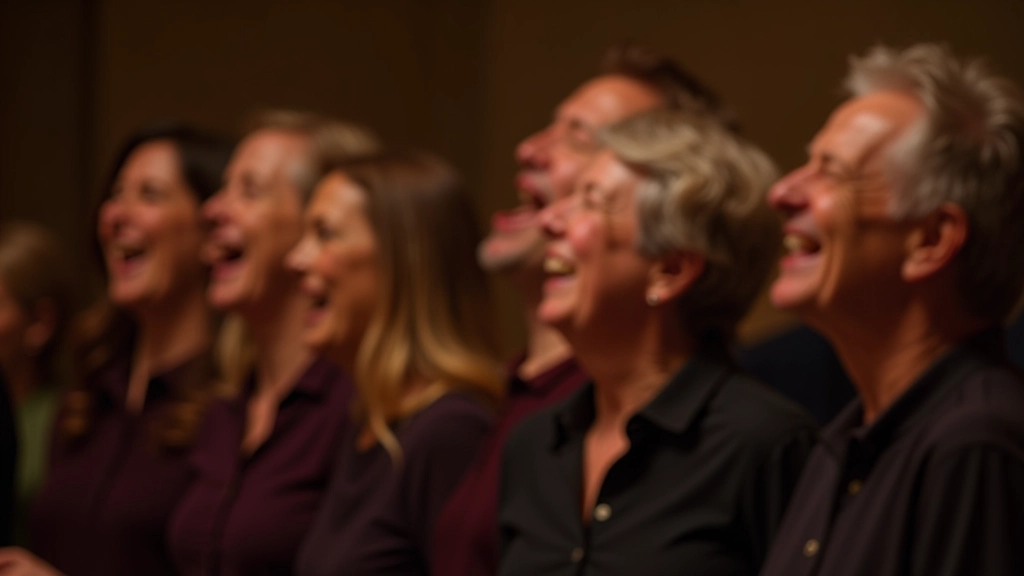
And the connections? They’re real. You’re working toward something together. You hear each other’s voices week after week. You celebrate when a difficult piece finally clicks. You laugh when someone forgets their part. These shared moments build genuine friendships that often extend beyond the choir.
Your Next Step Is Simple
Look up three choirs in your area this week. Call or message them. Ask about a trial rehearsal. That’s it. You’re not committing to anything permanent. You’re just checking it out.
Most people who’ve been singing in choirs for years say their biggest regret was waiting so long to start. They thought they couldn’t sing, or they weren’t musical enough, or they’d feel out of place. None of those things turned out to matter. What mattered was showing up and being willing to try.
Community choirs aren’t exclusive clubs. They’re groups of regular people — teachers, accountants, retirees, builders — who decided that raising their voices together was worth their Tuesday or Thursday evening. You don’t need a reason beyond “I want to sing with others.”
Important Disclaimer
This article provides general information about joining community choirs. Specific experiences vary widely depending on the choir, location, conductor, and individual circumstances. Before joining any organization, we recommend visiting a rehearsal in person and speaking directly with current members and the conductor. Choir membership may involve fees, performance expectations, or other requirements that vary by group. Always confirm what’s involved before making a commitment. The information here is for educational purposes and represents common experiences, but individual results and circumstances will differ.